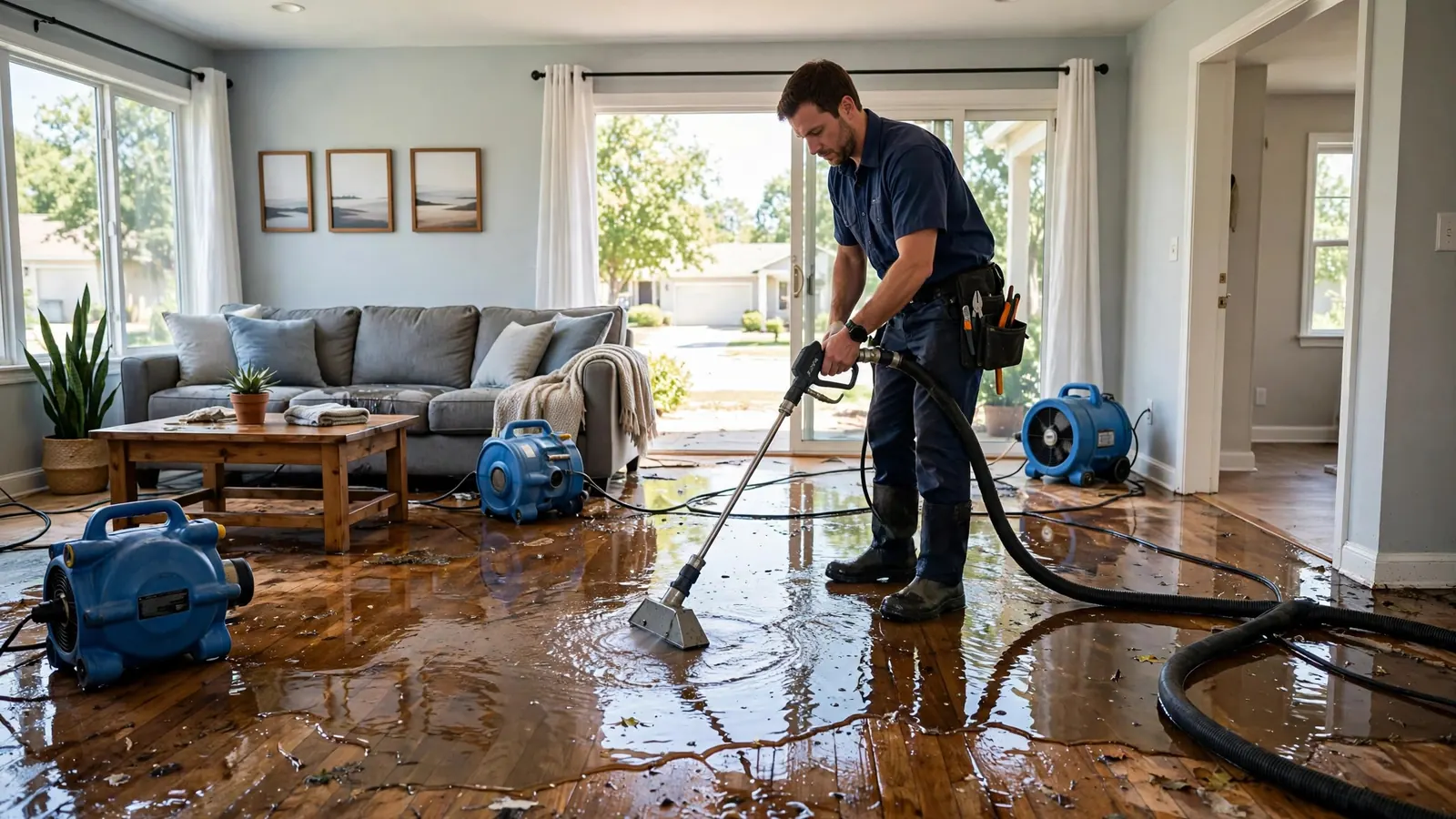


Water in the wrong place is one of the most stressful problems a Boise homeowner can face. A supply line lets go overnight, a water heater leaks into a garage, or spring runoff finds its way into a crawl space, and suddenly you are standing in a wet room wondering what to do first and how much damage is quietly spreading behind the walls.
This site is a homeowner help guide for water damage removal and restoration in Boise and the Treasure Valley. It explains what professional water damage work actually involves, which problems need urgent attention, and how to get help through the Request Assistance page. It is educational first: the better you understand the process, the better decisions you can make in the first hours, when those decisions matter most.
Start With Safety and the Water Source
Before anything else, make sure the area is safe. If water is near electrical outlets, appliances, or a panel, keep people and pets out of that area until the power situation is addressed. If you can safely reach the main water shutoff valve and the water is coming from your plumbing, turning it off stops the damage from growing. If the water involves sewage or you suspect contamination, treat it as a health hazard and stay out of it — that situation is covered in the guide to sewage cleanup in Boise.
Once the source is stopped and the area is safe, document what you see. Photos and short videos of standing water, wet materials, and the apparent source can be valuable later, especially if you file a claim. The page on water damage insurance claims explains what documentation insurers typically ask for.
The Main Water Damage Services, Explained
Professional water damage work is not one single service. It is a sequence of steps, and different problems emphasize different steps. The main categories Boise homeowners ask about are:
- - Water removal and restoration — the full process from extracting standing water through drying, cleaning, and repair preparation. See the main guide to water damage restoration in Boise.
- - Sewage cleanup — decontamination work for toilet backups, sewer line failures, and septic problems. This is hazardous work with strict precautions, described on the sewage cleanup page.
- - Flood cleanup — cleanup after water enters from outside the home, such as river flooding, canal overflow, storms, or snowmelt. The flood cleanup in Boise page covers what makes outside water different.
- - Water extraction and structural drying — the technical core of almost every job: removing liquid water, then drying walls, floors, and framing with measured moisture checks. See water extraction and structural drying.
- - Burst pipe and plumbing-leak damage — cleanup and drying after a pipe fails, common during Boise cold snaps. Read about burst pipe and plumbing-leak water damage.
- - Appliance-leak damage — slower, sneakier leaks from dishwashers, washing machines, refrigerators, and water heaters that can damage floors and subfloors before anyone notices. See appliance-leak water damage.
Why Drying Matters as Much as Cleanup
Removing visible water is only the first half of the job. Drywall, insulation, wood framing, and subflooring can hold moisture long after a surface looks dry, and trapped moisture can lead to warped materials, odors, and mold growth if it is left in place. That is why professional restoration focuses so heavily on measured drying: moisture meters, humidity control, and follow-up checks that confirm materials have actually returned to a dry standard, rather than guessing by touch.
If you want to understand that part of the process in plain language, the guide to water extraction and structural drying walks through how extraction, airflow, and dehumidification work together.
Boise and Treasure Valley Context
Local conditions shape local water damage. Boise's cold winters mean frozen and burst pipes are a recurring risk, especially in older homes in neighborhoods like the North End, where aging plumbing and insulation gaps can leave pipes exposed. The Boise River, the foothills, and the valley's network of irrigation canals and laterals mean outside water is also a real consideration for homes in low-lying areas or near canal easements, particularly during spring snowmelt and heavy runoff.
This guide serves Boise first, and it also covers the wider valley. Homeowners to the west can read about water damage restoration in Meridian and water damage restoration in Nampa, and the full footprint is listed on the service area page.
What Does Water Damage Restoration Cost?
Costs depend on how much water there is, what it touched, how long it sat, and whether contaminated water or demolition is involved. Because every situation is different, this page does not quote prices. The dedicated water damage restoration cost guide explains the factors that drive cost up or down, the difference between small clean-water jobs and large contaminated ones, and questions worth asking before you agree to any work.
How Insurance Usually Fits In
Many sudden and accidental water events — a burst pipe is the classic example — are the kind of losses homeowners insurance is designed around, while long-term leaks and outside flood water are often treated differently. The details live in your policy, not in a general guide, but the water damage insurance claims page explains the usual process: documenting damage, mitigating further loss, keeping receipts, and communicating with your insurer. Acting promptly to limit further damage is something insurers generally expect, and it protects your home either way.
How This Site Works
Boise Water Damage Removal is an informational and lead-generation resource, not a restoration company with its own crews. When you use the contact page to request assistance, the goal is to connect your request with a professional restoration provider who serves your part of the Treasure Valley. You can read more about that on the about page. There is no obligation in asking, and the educational guides on this site are free to use whether or not you ever request help.
Choosing What to Do Next
Homeowners facing water damage usually weigh three questions. First, is anyone at risk? Sewage, electrical involvement, or deep water changes the answer immediately and pushes everything else aside. Second, is the water still spreading? A stopped source and a drying structure can wait a few hours for a considered decision; an active leak cannot. Third, how deep has the moisture gone? That is the question surface appearances answer worst, and it is where professional assessment earns its keep, because the difference between drying a floor and opening a wall is the difference between two very different jobs.
You do not need to resolve all three alone. The guides on this site are organized to help you think through each one, and if you would rather talk it through with a provider who works in the Treasure Valley, the contact page is the place to start.
Frequently Asked Questions
What should I do first when I find water damage?
Stop the source if you can do so safely, keep clear of water near electrical hazards, and document the damage with photos. Then begin the process of getting the water removed and the structure dried, because the longer materials stay wet, the more damage develops. If sewage may be involved, stay out of the area and treat it as a contamination problem.
Is water damage always an emergency?
Not always, but it is always time-sensitive. A large amount of standing water, sewage involvement, or water reaching electrical systems needs immediate attention. Even a small, clean leak deserves prompt drying, because hidden moisture in walls and floors can cause secondary damage that is more expensive than the original problem.
Can I handle water damage cleanup myself?
Small, clean-water spills on hard surfaces are often manageable with towels, a wet vacuum, and good ventilation. Anything involving sewage, water that has sat for a long time, soaked drywall or insulation, or a large area is a different category of problem. Those situations involve contamination risks and hidden moisture that household equipment cannot reliably address.
Does homeowners insurance cover water damage?
It depends on the cause and your policy. Sudden, accidental events like burst pipes are commonly covered, while gradual leaks and outside flood water are commonly excluded or require separate coverage. Document everything, limit further damage, and check your specific policy — the insurance claims guide explains the process in more detail.
Which areas does this guide cover?
Boise is the focus, including neighborhoods across the city, and the guides also address the wider Treasure Valley. Dedicated pages cover Meridian and Nampa, and the service area page describes the general footprint.
Request Assistance
If you are dealing with water damage now and want help, use the Request Assistance page to describe your situation. The more detail you share about the source, the areas affected, and how long the water has been present, the easier it is to route your request appropriately.
